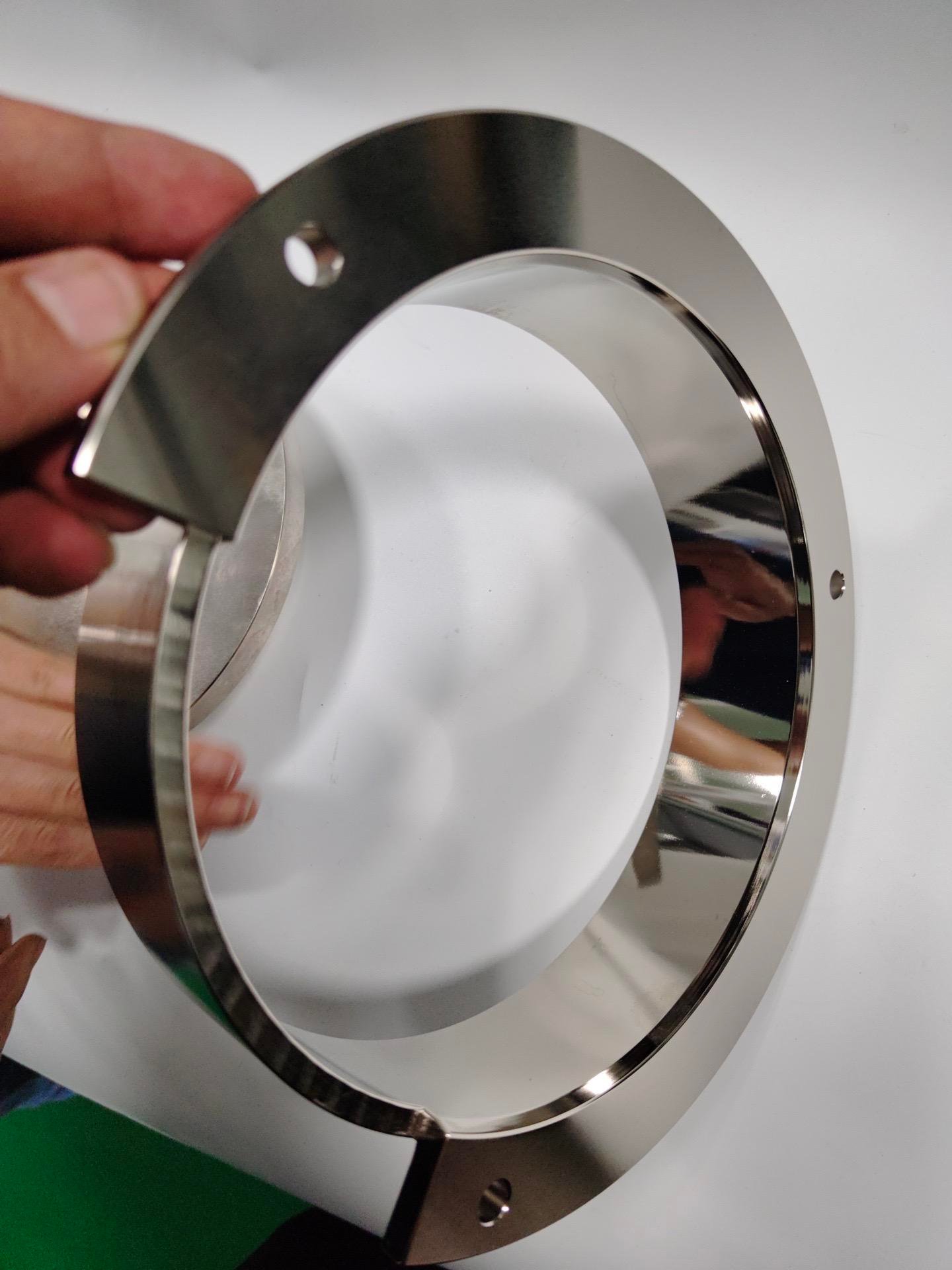
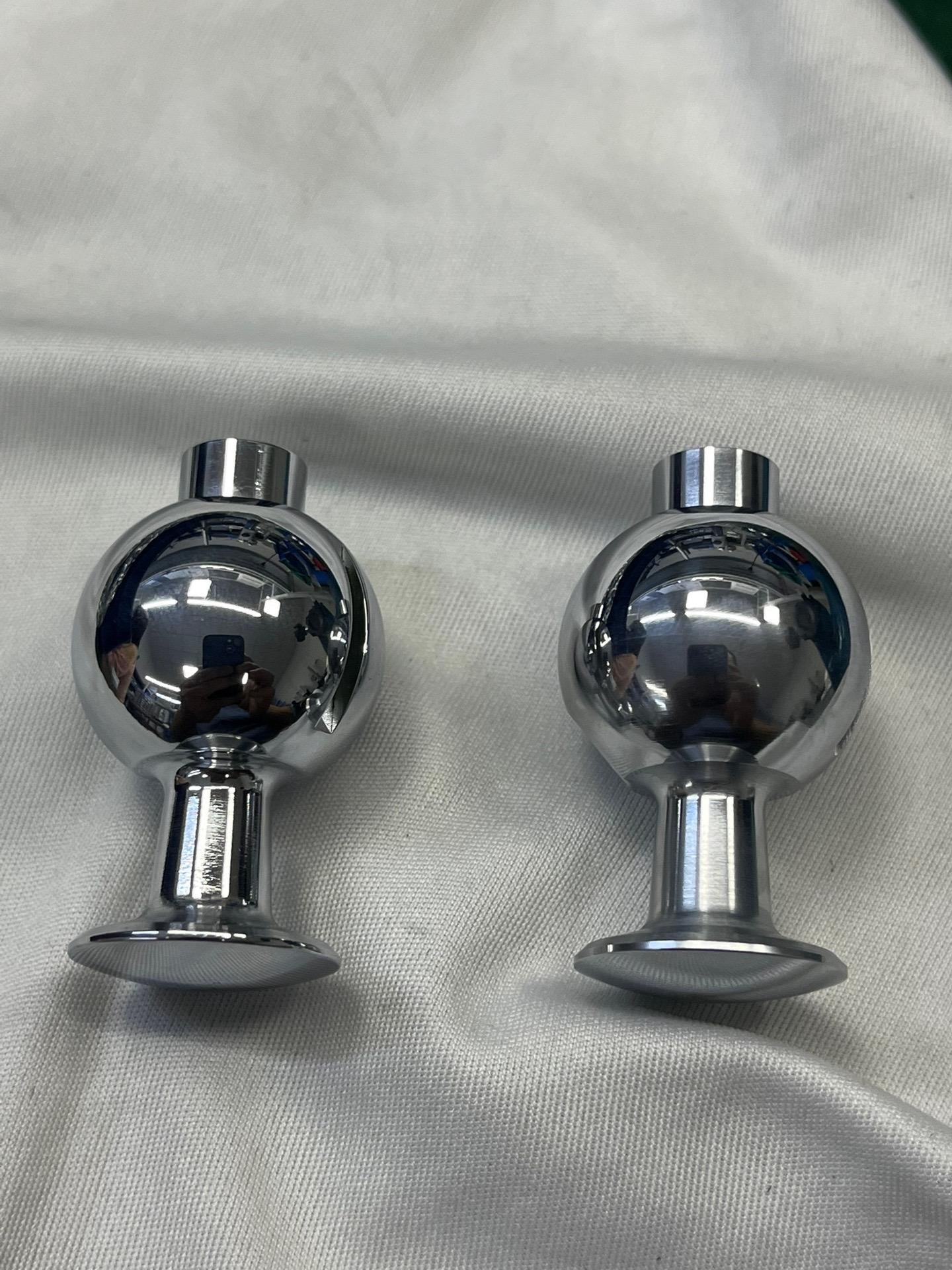
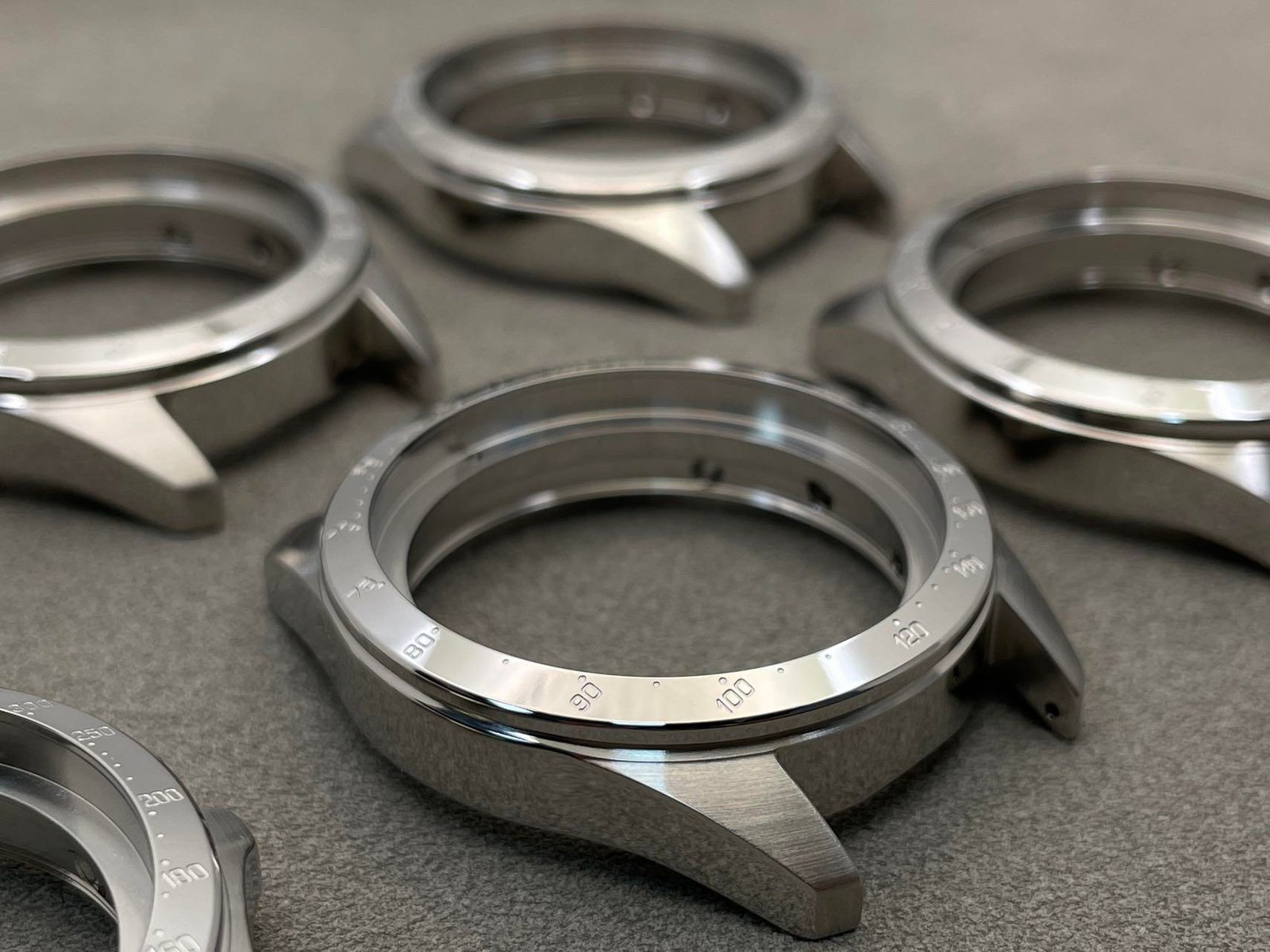
These are the questions we get from aerospace engineers, medical device designers, bicycle builders, and motorsports teams every day.
1. Why is titanium machining so expensive? Can you reduce the cost?
Titanium machining is expensive for three reasons: (1) material cost — Ti6Al4V is 10–20× the cost of steel ($30–60/kg vs. $2–5/kg); (2) machining time — titanium machines 3–5× slower than steel (low cutting speed, shallow cuts, frequent tool changes); (3) tooling cost — titanium consumes 5–10× more tooling per part than steel. To reduce cost, we recommend: (1) design for machinability — avoid deep pockets, thin walls, undercuts, and tight tolerances on non‑critical dimensions; (2) use Grade 2 instead of Ti6Al4V if strength allows — Grade 2 machines 30% faster and costs 20% less; (3) increase order quantity — tooling and setup cost amortizes over more pieces (50 pieces = 50% of 1‑piece unit price); (4) consider alternative materials — for some applications, 17‑4PH stainless or 7075 aluminum can replace titanium at 30–50% lower cost; (5) optimize surface finish — Ra ≤ 0.8μm (standard) is 30% faster than Ra ≤ 0.4μm (finish pass). We provide DFM feedback with every quote — we'll tell you exactly which design features increase cost and how to reduce them without sacrificing performance.
2. What's the difference between Ti6Al4V (Grade 5) and commercially pure titanium (Grade 2)?
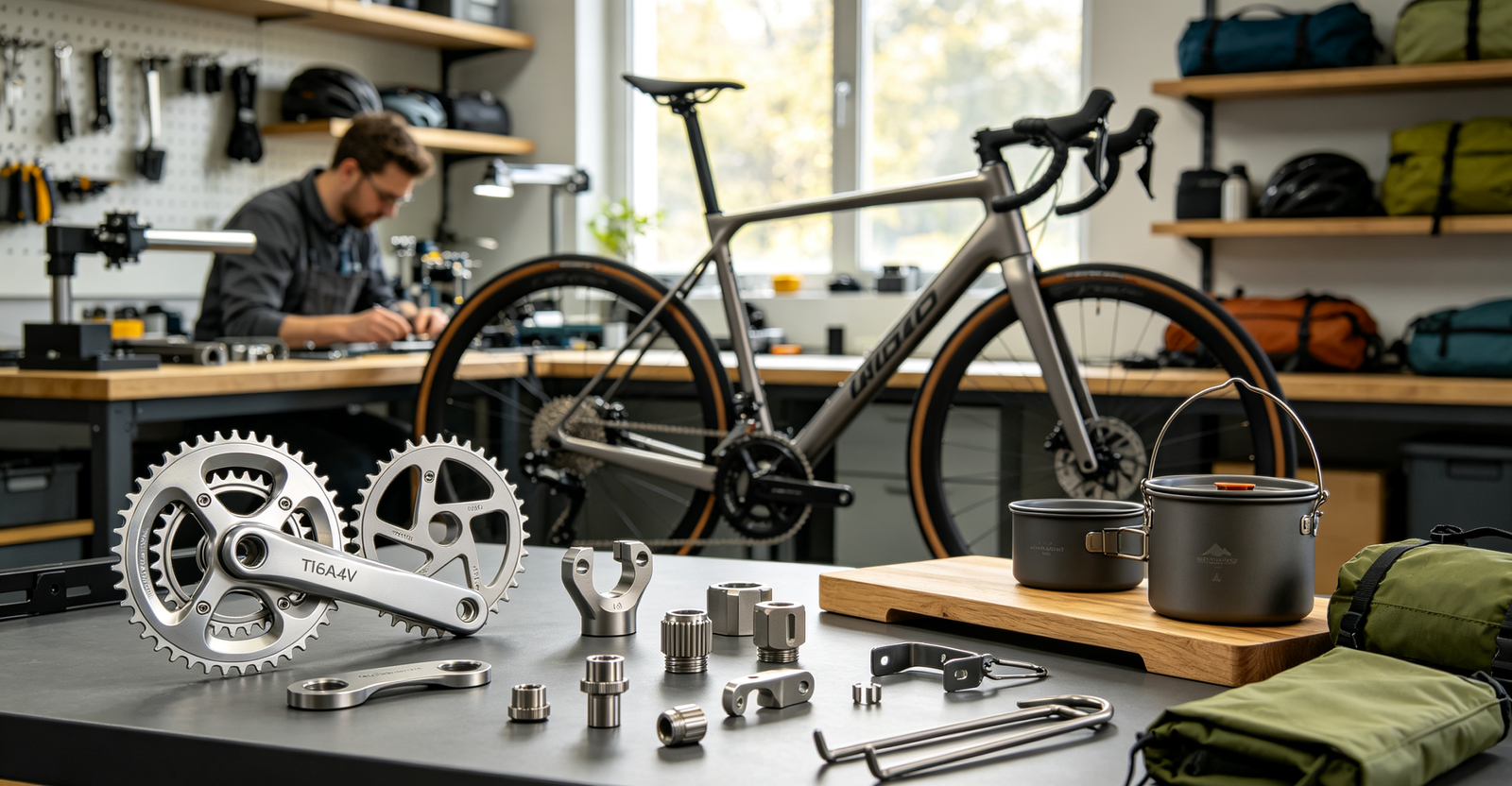
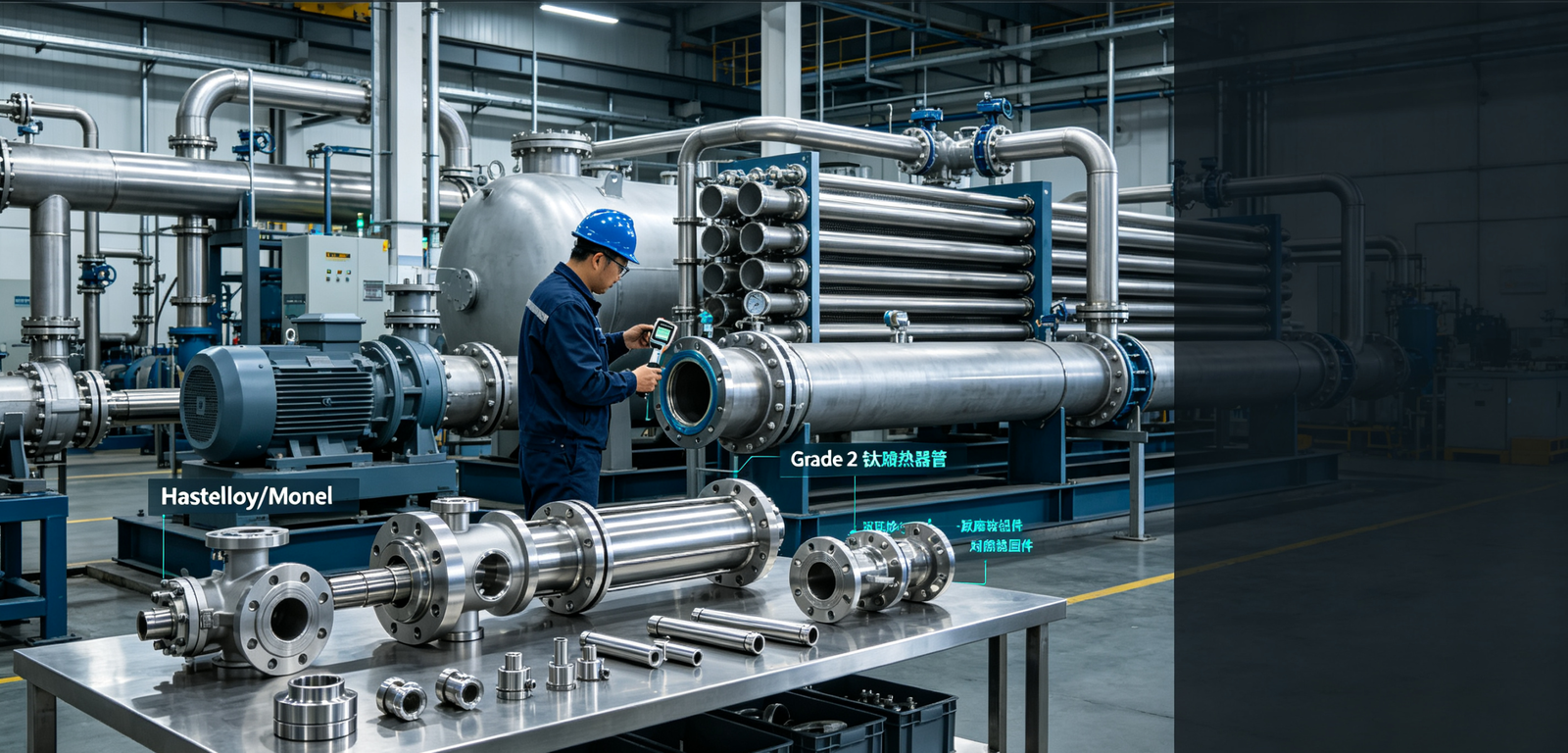
Ti6Al4V (Grade 5) is an alloy of titanium with 6% aluminum and 4% vanadium. It's the most common titanium alloy, with: tensile strength 900 MPa, yield strength 860 MPa, hardness HRC 36–38, and good fatigue resistance. It's 2× stronger than Grade 2, but harder to machine and form. Best for: high‑stress structural parts, aerospace, medical implants, motorsports, bicycle cranks. Commercially pure titanium (Grade 2) is 99%+ pure titanium with trace amounts of iron and oxygen. It has: tensile strength 345 MPa, yield strength 275 MPa, hardness HRC 15–20, and excellent formability and corrosion resistance (superior to Ti6Al4V in some chemical environments). It's 30% easier to machine and 20% less expensive. Best for: chemical processing, marine, heat exchangers, architectural, medical device housings, low‑stress parts. General rule: use Ti6Al4V when strength and fatigue matter; use Grade 2 when corrosion resistance, formability, and cost matter. We can help you choose based on your specific loading, environment, and budget.
3. Do you provide material certificates for titanium? What's included?
Yes — full material certification with every titanium and high‑performance alloy order. Included: (1) Mill Test Report (MTR) from the original mill — heat number, chemical composition (15+ elements verified by spectrometer), mechanical properties (tensile strength, yield strength, elongation, reduction of area, hardness), material specification (ASTM B348 for bar, AMS 4928 for Ti6Al4V, etc.), supplier name and location, heat treatment condition; (2) our incoming inspection report — XRF composition verification, hardness test, visual inspection; (3) material traceability document — linking every finished part to its raw material heat number, via our job traveler (machine, operator, tooling, inspection results); (4) for special applications: aerospace (AMS specifications, NADCAP if required), medical (ISO 13485, biocompatibility ISO 10993), motorsports (FIA specifications). We only source from qualified, audited suppliers (ATI, Timken, VSMPO, etc.) — no uncertified "mystery metal." For critical parts, we can provide Positive Material Identification (PMI) testing (XRF) on every finished part, with a report. Send us your certification requirements — we'll tell you exactly what we can provide.
4. Can you heat treat titanium? What's the process?
Yes — we provide vacuum heat treatment for titanium and high‑performance alloys. Process for Ti6Al4V: (1) Stress relief (optional, for complex parts) — 550–650°C for 2–4 hours in vacuum, reduces machining stresses; (2) Solution treatment — 920–950°C for 1–2 hours in vacuum (below beta transus ~995°C), then argon gas quench (not water/oil, which causes contamination and distortion); (3) Aging — 480–590°C for 4–8 hours in vacuum, precipitates fine alpha phase for strength; (4) Result — hardness HRC 36–38, tensile strength 900+ MPa, yield strength 860+ MPa. Key points: (1) ALL titanium heat treatment must be in vacuum or inert gas — air heat treatment causes alpha‑case (oxygen‑enriched brittle surface layer) that must be removed; (2) we use fixture‑based processing to control distortion (parts supported on graphite/ceramic fixtures); (3) controlled cooling (argon gas quench, not water/oil) to minimize distortion; (4) post‑heat treatment straightening available if needed (warm straightening at 400–500°C); (5) hardness verification (Rockwell HRC) at multiple points per part. Our typical results: distortion ≤0.05 mm, no alpha‑case, hardness within ±2 HRC of target. We also provide: stress relief, annealing, solution treatment + aging, and custom heat treatment cycles for specific alloys (Inconel 718: 980°C solution + 720°C/620°C double aging; Hastelloy C276: 1120°C solution anneal + water quench).
5. What surface treatments do you recommend for fatigue‑critical titanium parts?
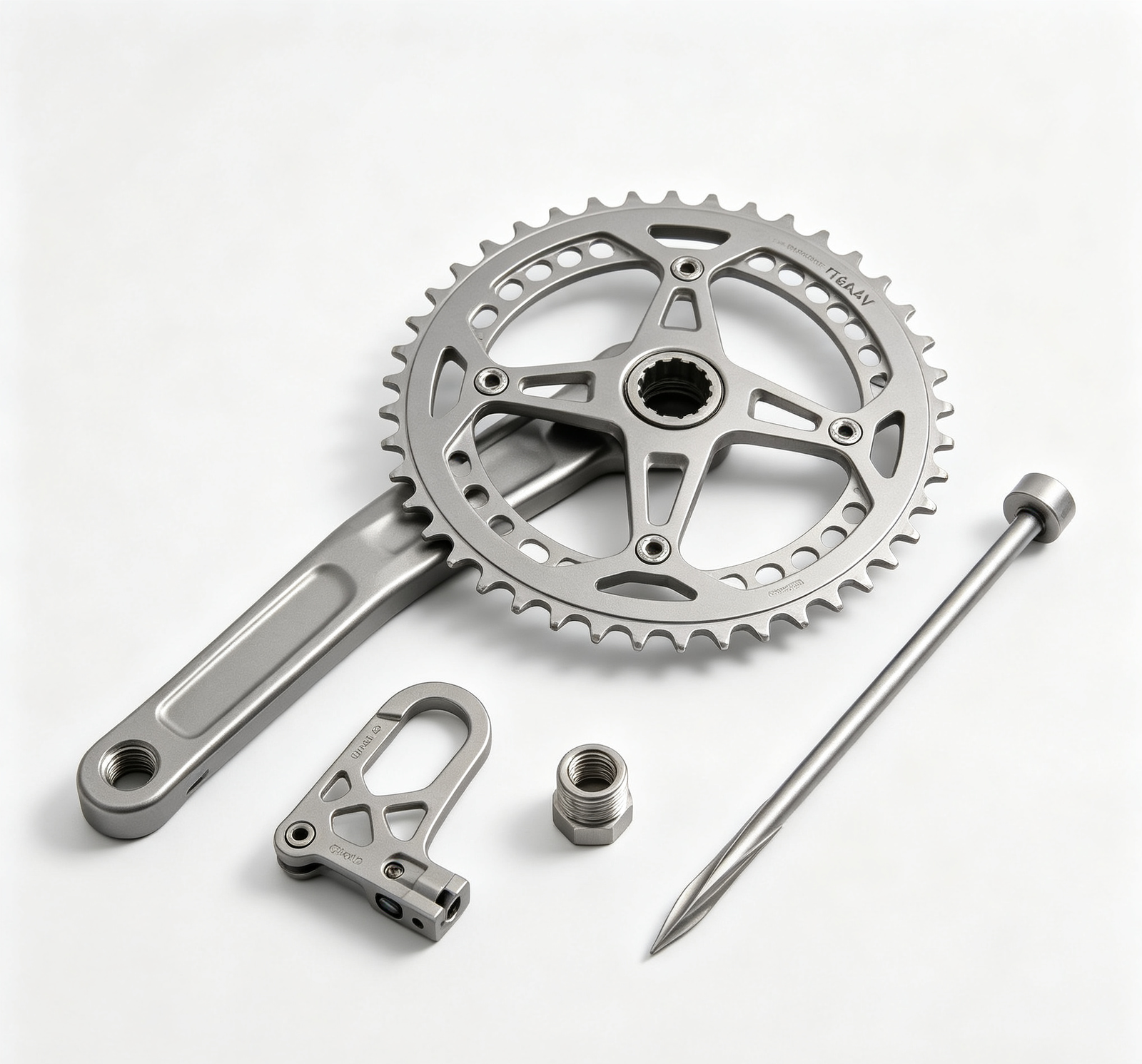
For fatigue‑critical titanium parts (bicycle, aerospace, motorsports, medical), we recommend a combination of surface treatments to maximize fatigue life: (1) Finish machining pass — always leave 0.1–0.2 mm for a finish pass with a new sharp tool, at reduced feed and depth, achieving Ra ≤ 0.4 μm. Eliminates chatter marks and tool marks that act as stress concentrators; (2) Acid pickling (HF/HNO₃ solution) — removes the alpha‑case (oxygen‑enriched brittle surface layer, 0.05–0.3 mm thick) that forms during heat treatment or welding. Alpha‑case is hard and brittle, and it's a common fatigue crack initiation site. Pickling removes it uniformly without dimensional change; (3) Shot peening — bombards the surface with small glass or ceramic beads, introducing compressive residual stress (0.2–0.5 mm deep). Compressive residual stress counteracts tensile fatigue stresses, improving fatigue life by 2–3×. We control peening intensity (Almen strip) and coverage (100–200%); (4) Electropolishing — electrochemical process that removes surface peaks, achieving Ra ≤ 0.1 μm and improving corrosion resistance. Best for medical and high‑end consumer parts; (5) PVD coating (TiN, DLC) — for wear surfaces, provides a hard, low‑friction coating (HRC 80+) that reduces galling and wear. Not recommended for fatigue‑critical surfaces (coating can introduce residual stress). Typical combination for bicycle crank: finish machining (Ra 0.4 μm) → acid pickling → shot peening → result: fatigue life improved from 3 months to 3+ years. We can recommend the right combination based on your application, stress level, and budget.
6. What's the lead time for titanium parts? Do you offer rush service?
Standard lead time for titanium parts: (1) Simple CNC prototype (1–5 pieces, Ti6Al4V, no heat treatment): 10–15 days; (2) Complex 5‑axis prototype (1–5 pieces, Ti6Al4V, with heat treatment + surface treatment): 15–25 days; (3) Small batch (10–50 pieces): 20–30 days; (4) Inconel parts: add 5–10 days (slower machining, more tool changes); (5) With vacuum heat treatment: add 3–5 days; (6) With surface treatment (pickling, shot peening, electropolishing): add 3–7 days. Rush service: (1) Simple titanium prototype: 7–10 days (30–50% rush fee); (2) Complex titanium prototype: 12–18 days (40–60% rush fee). Rush service requires: in‑stock material (Ti6Al4V, Grade 2), no special heat treatment (or we use a partner furnace with rush capacity), simplified surface treatment (as‑machined or bead blasted). To speed up your order: (1) choose in‑stock materials; (2) provide complete 3D CAD (STEP) with GD&T; (3) avoid complex 5‑axis geometries if possible; (4) order 2–3 pieces (setup cost amortized); (5) approve DFM feedback quickly. We provide a detailed timeline with every quote, and we update you at every stage (material received, machining complete, heat treatment complete, inspection complete, shipped).